Views: 2 Author: Site Editor Publish Time: 2026-10-20 Origin: Site
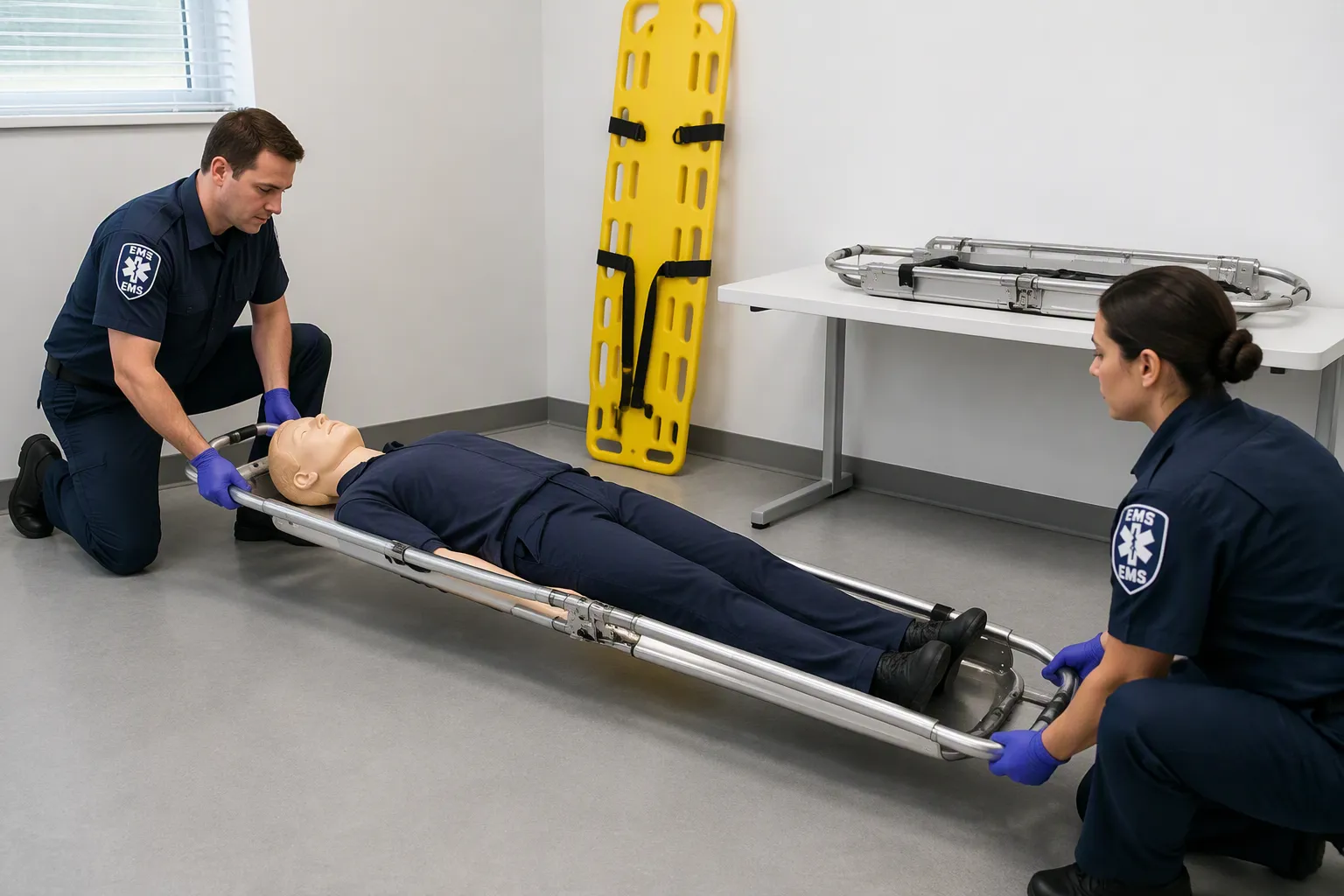
An aluminum scoop stretcher is a rigid, two-piece metal device. Its halves separate and reassemble around a patient, so lifting requires minimal movement. The tool safely transfers patients with suspected spinal or lower-body injuries from the ground or confined spaces. The term EMS scoop stretcher describes scoop stretchers built for emergency medical service use, and these models come in aluminum and plastic versions. Buyers comparing an aluminum scoop stretcher plastic scoop stretcher ems scoop stretcher will find distinct strengths in each design.
Aluminum scoop stretchers are strong and durable for heavy-duty rescues.
Plastic scoop stretchers are lighter and let X-rays pass through for imaging.
Choose a stretcher based on your team's needs, environment, and budget.
The aluminum scoop stretcher plastic scoop stretcher ems scoop stretcher category splits along one clear line: the material of the patient-bearing shell. Aluminum models use high-strength aluminum alloy, while plastic models use high-density polyethylene or ABS engineering plastic. Each material brings its own set of performance properties to the rescue scene.
Stretcher Type | Material | Weight | Key Performance Properties |
|---|---|---|---|
Aluminum | High-strength aluminum alloy | 15–20 lbs | Durable, lightweight, easy handling, ideal for emergencies; supports up to ~350 lbs |
Polymer/Plastic | High-density polyethylene | Lighter than aluminum | Easy to clean, X-ray compatible, maintains temperature |
Aluminum alloy earns its place in emergency response for one core reason: it combines lightness with strength. Rescue teams handle the stretcher with less fatigue, and the frame holds its shape under load. Stainless steel variants exist for heavy-duty settings that demand extra toughness and corrosion resistance. Plastic models deserve a close inspection at the hinges, because material degradation can shorten equipment lifespan. A quick check for brittleness and hidden cracks near the hinge points pays off in long-term reliability.
Several material properties drive the choice between these two builds. Aluminum alloys provide structural integrity while remaining easy to transport for agile emergency response. Non-slip surfaces enhance patient safety by preventing unnecessary movement during transport. Corrosion resistance matters wherever stretchers contact bodily fluids or harsh cleaning agents. Thermal stability keeps the device functional across a range of environmental conditions.
Weight is the first difference a crew notices. Polymer and high-density plastic stretchers weigh less than aluminum stretchers, so plastic scoop stretchers hold a clear weight advantage. Aluminum alloy scoop stretchers generally weigh more than foldable plastic scoop stretchers. That extra mass buys strength, and the trade-off shapes how each model fits a given service.
Strength and durability favor aluminum. An aluminum alloy stretcher is sturdy and durable, with high strength and excellent load-bearing properties that meet most emergency transport needs. An ABS engineering plastic stretcher is lightweight and economical, with good impact resistance that resists denting and deformation. Its strength is limited, however, and its load-bearing capacity is lower. Long-distance transport of large or seriously injured patients can exceed what a plastic shell handles well. Plastic also ages over time and can crack with long-term use.
Weight capacity numbers make the gap concrete. Standard aluminum scoop stretchers typically carry 350–400 lbs (159–181 kg). High-strength polymer models range from 350–500 lbs (159–227 kg). Specialized bariatric models reach 700+ lbs (318+ kg), with some rated up to 1,000 lbs. A typical aluminum unit weighs only about 17 lbs while supporting 350 lbs. Across the broader market, scoop stretcher models support weights from 250 to 350 pounds, and some configurations handle 200–300 kg (440–660 lbs). These devices are built for repeated clinical use and easy cleaning, which signals durability for routine medical transport.
Durability lives in the details. Inspect joints, hinges, and locking mechanisms first, because stress appears there before anywhere else. Premium models use reinforced connection points and precision-engineered locks that resist accidental opening during transport. Twin safety lock systems add double protection against accidental separation while a patient is on board. High-strength aluminum alloy construction balances durability with light weight, typically 15–20 lbs while supporting up to 350 lbs. One representative model measures 67" x 4" x 19", weighs 23.5 lbs, and carries 380 lbs, with easy locking and unlocking plus easy cleaning.
Heat exposure changes the picture for both materials. Aluminum melts at roughly 660°C (1220°F). Near that point it rapidly loses strength and structural integrity. Its high thermal conductivity means it transfers heat quickly, which can endanger the patient and make the frame too hot to handle during rescue. Traditional plastic stretchers are even more fire-vulnerable. Many plastics have low melting points, are highly combustible, release toxic fumes when burned, and may deform or melt quickly, which renders them unusable for patient transfer. Neither material suits a direct flame environment, and crews should factor fire risk into scene assessment.
Imaging compatibility separates the two materials in a hospital setting. High-density polyethylene is X-ray compatible, so a plastic scoop stretcher can stay under the patient during imaging without blocking the view. Aluminum blocks X-rays, so crews typically move the patient off an aluminum board before a scan. Services that routinely image trauma patients in the field-to-ER chain should weigh this difference carefully.
Sanitization favors smooth, non-porous surfaces. Aluminum builds clean up easily after use, and corrosion-resistant finishes hold up to repeated washing with harsh cleaning agents. Plastic shells also wipe down well and maintain temperature, which helps in cold or hot environments. Both materials support the routine cleaning that repeated clinical use demands. The deciding factor is often the cleaning protocol of the service, not the material alone.
Match the material to the mission: aluminum for strength and repeated heavy-duty use, plastic for lighter weight and imaging compatibility.
The aluminum scoop stretcher earns its reputation through a set of design choices that directly serve patient handling. High-strength aluminum pairs with precision-molded composites to create a frame that stays lightweight yet robust. Seamless construction resists corrosion, heat, cold, and body fluids, so the device holds up to years of daily service and cleans up quickly between calls.
The split-apart two-piece design defines the category. The stretcher separates into two units, which lets staff place it around a patient or slide the halves underneath someone on the ground. This approach avoids lifting the patient clear and reduces motion, a critical advantage when injury is suspected. Twin safety lock hinges enable quick uncoupling at either end, so crews can position the device gently without log-rolling and minimize cervical spine movement.
Several features support the crew and the patient at the same time:
Split-apart two-piece design: separates into two units so staff can slide the halves under a patient on the ground, reducing motion when injury is suspected.
Lightweight, sturdy aluminum construction: easy for staff to work with during transfers.
Cushioned cradle: provides patient comfort during transport and balances safety with comfort.
Multiple handles: allow more than one rescuer to lift together, which enables coordinated handling of heavier patients or those in awkward postures.
Bright coloring: improves visibility for the rescue team.
Versatility rounds out the feature set. The frame works with head immobilizers and restraint straps for tailored support, and thermally treated polymer surfaces maintain a neutral temperature for patient comfort. Adjustable telescopic length accommodates patients of varying heights, and high-tensile quick-lock nylon belts secure the torso and limbs. A hinged clutch device at both ends lets personnel uncouple the halves and slide them under the patient without disturbing the body.
The central benefit of the aluminum scoop stretcher is motion control. The split two-piece design slides under the patient from both sides, which avoids log-rolling or excessive movement that could worsen a suspected spinal injury. The stretcher adjusts to the patient's body and locks into a stable platform, providing better immobilization and helping preserve spinal alignment during transfer.
Clinical evidence supports this handling approach. A study in the Journal of Emergency Medicine found that scoop stretchers effectively immobilized the spine and were associated with lower pain levels versus rigid backboards. Greater comfort also reduces patient anxiety. The device keeps the patient supine throughout transfer, which maintains proper spinal alignment when it matters most. For suspected spinal injuries such as falls from height or high-impact collisions, the minimal-movement approach helps prevent a devastating secondary spinal cord injury.
Benefit | Supporting Evidence |
|---|---|
Minimizes patient movement | Split two-piece design slides under the patient from both sides, avoiding log-rolling or excessive movement that could worsen a suspected spinal injury. |
Maintains spinal alignment and immobilization | Stretcher adjusts to the patient's body and locks into a stable platform, providing better immobilization and helping preserve spinal alignment during transfer. |
Reduces pain and discomfort | Clinical study in the Journal of Emergency Medicine found scoop stretchers effectively immobilized the spine and were associated with lower pain levels versus rigid backboards; greater comfort also reduces patient anxiety. |
Avoids log-rolling | Eliminates the need for log-rolling, a maneuver that risks exacerbating spinal injury. |
The handling sequence itself shows why the design works. The two-piece, scissor-like frame unlatches at head and foot and splits into two longitudinal halves. Operators gently separate the patient's clothing to clear the area. One half slides under the patient from one side, and the other half slides in from the opposite side. The halves align and lock together at the head and foot ends. The patient ends up supported with almost no rolling or vertical lifting, which eliminates the log-roll that can displace pelvic fractures and worsen hip fracture pain. At only 7–9 kg, the lightweight aluminum and polymer build also reduces strain on staff during careful maneuvering.
Comparative data sharpens the case against older transfer devices. Overall spinal movement during initial handling runs 6–8 degrees less with a scoop stretcher than with a backboard. Cervical spine flexion-extension measures 3.18 degrees less, and cervical spine lateral bending measures 2.01 degrees less. A 2022 study reported a 30% reduction in secondary injuries during transport with scoop stretchers versus traditional methods. A 2021 study found that scoop stretchers cut patient handling time by about 20% compared to older methods.
Metric | Scoop Stretcher vs. Backboard |
|---|---|
Overall spinal movement during initial handling | 6–8 degrees less with scoop stretcher |
Cervical spine flexion-extension | 3.18 degrees less with scoop stretcher |
Cervical spine lateral bending | 2.01 degrees less with scoop stretcher |
Log-roll requirement | Eliminated (split-and-lock design) |
Best use case | Initial handling where spinal motion restriction is priority |
Additional handling benefits accumulate over a shift. The no-log-roll split design keeps the patient in their found position, avoids twisting forces, maintains pelvic ring stability, and allows even force distribution through multiple handles. A gentle curved surface reduces pressure points and pain compared with flat backboards. Radiolucent construction enables X-rays without additional patient movement, and the foldable design saves ambulance storage space.
The aluminum scoop stretcher fits scenarios where careful handling and immobilization are essential. First responders find it particularly useful for patients with suspected spinal injuries or fractures. It also suits transfers from awkward positions, such as moving a patient from a bed to a stretcher or lifting someone from the ground in a confined space. EMS professionals rely on it when patient immobilization and minimal movement are crucial to preventing further injury.
Cost shapes the procurement decision, and material choice is a primary factor affecting weight, durability, and cost. Aluminum alloy frames are lightweight yet strong, resistant to bending under load, and durable over years of daily EMS use. That profile makes aluminum the more common choice for ambulance services and hospitals that need a reusable device. Plastic polyethylene versions are non-conductive, fully waterproof, and typically lower in cost than aluminum models, which suits water and outdoor rescue and corrosion-sensitive settings. Plastic scoop stretchers are generally cheaper than aluminum ones, so budget-conscious services often weigh the two side by side.
Bulk purchasing changes the math. Scoop stretcher pricing varies significantly depending on materials, features, and order quantities. Buying in bulk can yield substantial discounts, an advantage for organizations equipping multiple ambulances or facilities. Services that standardize on one platform across a fleet often recover the higher unit cost of aluminum through longer service life and lower replacement rates.
The aluminum scoop stretcher plastic scoop stretcher ems scoop stretcher comparison ultimately comes down to mission fit. Aluminum models serve demanding rescues, repeated heavy-duty use, and fleet standardization. Plastic models serve lighter duty, imaging-heavy workflows, and tight budgets. Both belong in the broader EMS scoop stretcher family, and the right pick depends on patient population, transport environment, and procurement priorities.
Plastic scoop stretchers use two separable halves that slide under a patient. This design immobilizes the patient without excessive lifting or movement, which proves valuable when spinal or delicate injuries are suspected. The plastic build keeps the unit lightweight, easy to fold, and simple to carry by hand or stow in emergency vehicles. The material also resists corrosion in flood or hurricane conditions. A smooth plastic surface lowers friction and eases transfers onto other equipment. Lower material costs than aluminum alloy allow budget-limited teams to procure more units.
Feature | Description |
|---|---|
Construction material | High-strength plastic — durable yet lightweight for easy handling |
High visibility | Bright yellow color improves spotting in low-light or chaotic scenes |
Weight and durability | Supports significant weight while remaining easy to carry and maneuver |
Patient comfort and safety | Securely immobilizes the patient and minimizes movement |
X-ray compatibility | Allows imaging without unnecessary patient movement |
The PE plastic model DW-SC004 measures 162×44×7 cm when open and folds to 120×45×9 cm. Compared with metal stretchers; it helps keep the patient's body temperature from becoming too cold or too hot.
EMS scoop stretchers span both aluminum and plastic builds, and each version serves emergency medical service work. Bright yellow coloring aids spotting in outdoor, nighttime, or low-visibility operations and shortens response time. A split design separates into two halves, and crews place them under the patient without lifting. The halves reconnect into a stable transport platform with a locking mechanism. Adjustable length accommodates patients from children to larger adults. High-strength plastic construction stays durable yet lightweight, and crews can carry, clean, and maintain it easily for demanding EMS use.
Selection starts with the patient population and the transport environment. Teams should weigh design and patient movement, use cases, adjustability, immobilization features, materials, weight capacity, portability, and the balance between patient safety and rescuer efficiency. Suspected spinal injuries, pelvic or hip fractures, confined-space extractions, and multi-trauma patients all favor the minimal-movement scooping technique. Standard aluminum models typically rate 159–181 kg, and high-strength polymer models reach 159–227 kg. Specialized bariatric models handle 318 kg or more. Procurement priorities now shift from lowest upfront price toward total cost of ownership. The aluminum scoop stretcher plastic scoop stretcher ems scoop stretcher comparison therefore rewards services that match features to protocols, demographics, and budget.
Aluminum scoop stretchers deliver strength and durability for demanding rescues. Plastic models offer lighter weight and radiolucency for imaging-heavy workflows. Each design serves a distinct mission.
EMS scoop stretchers span both materials. The aluminum scoop stretcher plastic scoop stretcher ems scoop stretcher decision depends on patient population, transport environment, and budget.
Readers should match stretcher features to their service's protocols and procurement priorities. That alignment protects patients and supports efficient operations.
Aluminum models offer the strength and rigidity that spinal immobilization demands. Their split-apart halves slide under the patient without log-rolling. Crews gain a stable platform for securing the torso and limbs during transfer.
High-density polyethylene passes X-rays, so the stretcher stays under the patient during scans. Aluminum blocks the beam and requires removal first. Services with imaging-heavy trauma workflows often favor the plastic build.
No. EMS scoop stretchers come in aluminum and plastic versions. Both designs separate into halves, lock into a rigid platform, and adjust for patient height. Material choice depends on the service's protocols and budget.
Avoid Making Incorrect Aluminum Casting Process Choices Ever Again