Views: 6 Author: Site Editor Publish Time: 2026-11-04 Origin: Site
A first aid box is a stocked, organized container of medical supplies. You use it to treat minor injuries and stabilize emergencies at home. Most household injuries happen in or near the home, so quick access to the right first aid box supplies can save critical minutes.
Statistic | Value |
|---|---|
Share of approximately 10.2 million domestic-setting injuries in 2006 occurring within homes and adjacent areas (U.S. study) | over half |
Share of injuries in 2021 occurring in homes and residential areas (South Korea national statistics) | 54.6% |
Green and Healthy Homes reports that an estimated 156,300 preventable injury-related deaths occurred in homes and communities in 2020, or about 78% of all preventable injury-related deaths that year.
2026 recommendations focus on a well-organized, regularly checked first aid box with first aid box supplies tailored to each household:
Clearly labeled pockets help you find items without emptying the contents.
Keep medications in a labeled inner pouch that stays zipped but reachable by an adult.
Choose resealable, water-resistant inner packaging for your first aid box supplies.
Review and replace first aid box supplies according to condition, expiration dates, and storage exposure.
Schedule quarterly checks, or at minimum inspect your first aid box and its supplies twice a year.
Mark your first aid box with a visible "last checked" date.
A well-stocked first aid box saves critical minutes during home emergencies.
Build your kit with basic first aid items, medications, and emergency tools.
Check your supplies quarterly and learn first aid skills to stay prepared.
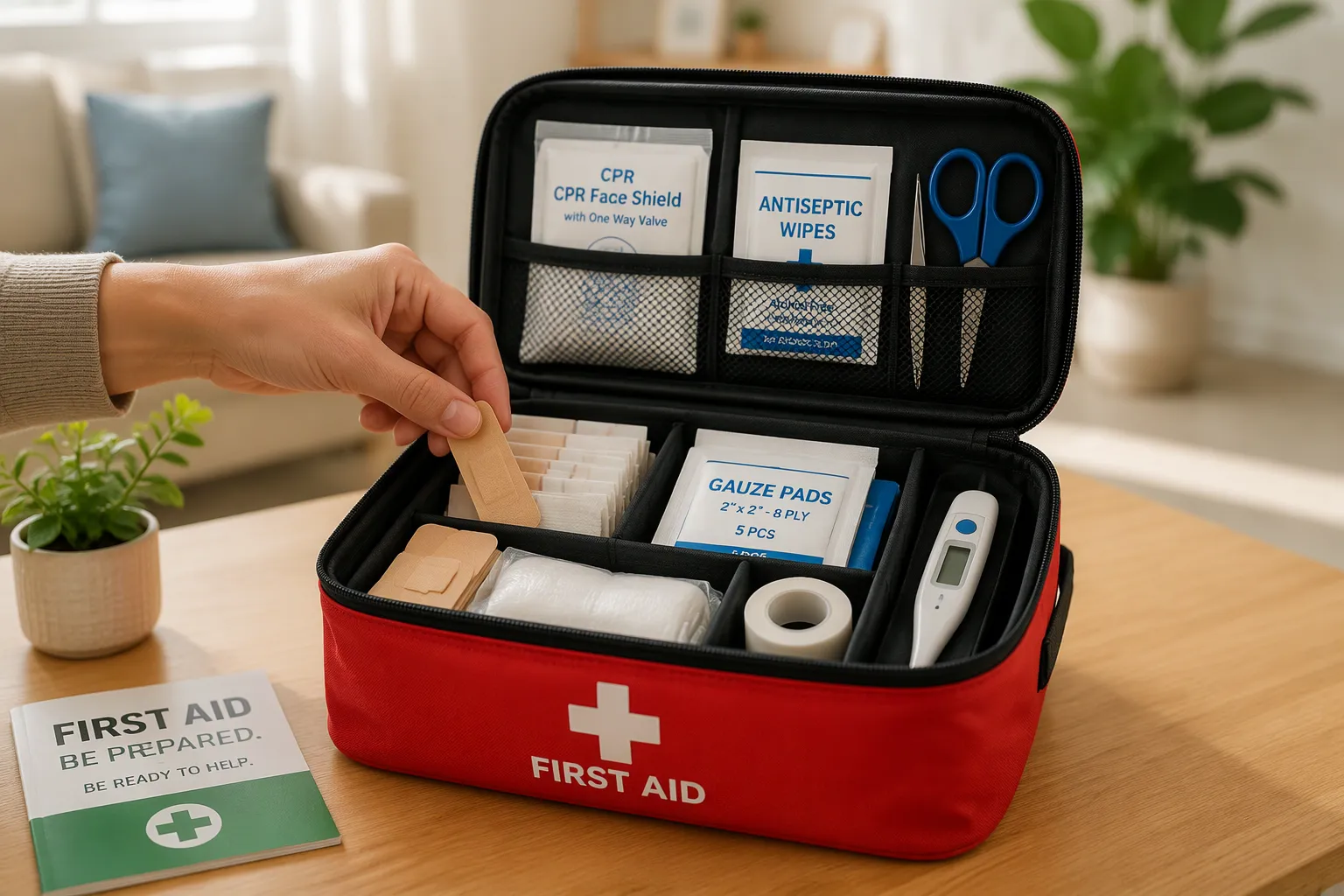
A first aid box is a portable, organized container that holds medical supplies for treating minor injuries and stabilizing serious ones. You stock it with bandages, antiseptics, medications, and tools. You keep it in a fixed, known location. The contents of a first aid box first aid box supplies follow a clear logic: each item has a labeled place, and you can reach it fast.
Emergencies at home rarely announce themselves. Medical Gear Outfitters notes that the first few minutes of an emergency often determine the outcome. Without adequate oxygenation, brain damage begins within four to six minutes. Anaphylaxis can escalate from mild symptoms to life-threatening airway compromise within minutes. An opioid overdose causes oxygen deprivation rapidly.
These timelines leave no room for searching drawers. A stocked kit puts the right supplies in your hands during those critical minutes. The same source stresses that effective care depends equally on accessible equipment and the knowledge to use it.
Household life in 2026 brings new urgency. More people work from home, cook at home, and care for aging relatives at home. A well-organized kit also saves money. Prompt treatment of minor burns, cuts, and sprains often avoids an expensive clinic visit. A first aid box first aid box supplies turn a chaotic moment into a managed one.
You now understand why a first aid box matters. The next step is the contents. A 2026-ready kit rests on three supply categories: basic first aid items, medications, and emergency tools. Each category serves a distinct job during an injury or sudden illness. Build all three, and your first aid box first aid box supplies cover the most common household scenarios.
Basic first aid items handle wounds, bleeding, and minor trauma. These supplies form the foundation of every home kit. The American Red Cross publishes a widely used inventory for a general-purpose first aid kit. Use this list as your baseline, then adjust quantities for your household size.
Item | Quantity / Specification |
|---|---|
Absorbent compress dressings | 2 (5 x 9 inches) |
Adhesive bandages (assorted sizes) | 25 |
Adhesive cloth tape | 1 (10 yards x 1 inch) |
Antibiotic ointment packets | 5 (approximately 1 gram) |
Antiseptic wipe packets | 5 |
Aspirin packets | 2 (81 mg each) |
Emergency blanket | 1 |
Breathing barrier (with one-way valve) | 1 |
Instant cold compress | 1 |
Nonlatex gloves | 2 pair (size: large) |
Hydrocortisone ointment packets | 2 (approximately 1 gram each) |
Gauze roll (roller) bandage | 1 (3 in.) |
Roller bandage | 1 (4 inches wide) |
Sterile gauze pads | 5 (3 in. x 3 in.) |
Sterile gauze pads | 5 (4 x 4 inches) |
Oral thermometer (non-mercury/nonglass) | 1 |
Triangular bandages | 2 |
Tweezers | 1 |
Emergency First Aid instructions | 1 |
Read the table as a starting point, not a ceiling. A household with young children needs more adhesive bandages and gauze pads. A home with older adults benefits from extra compress dressings and a second thermometer. The Red Cross list covers the essentials well. Your job is to scale it to your reality.
Pay attention to the materials inside your kit. Nonlatex gloves protect family members with latex allergies. A non-mercury, nonglass thermometer survives drops and stays safe if it breaks. Antibiotic ointment and antiseptic wipes prevent infection in minor cuts and scrapes. Hydrocortisone ointment calms insect bites and skin irritation. Each item earns its place through a specific, common use.
Household-specific items deserve a spot too. Burn dressings manage kitchen and heat injuries, a frequent domestic accident. Antiseptic solutions support safe healing for minor scrapes. A home first aid kit built around these additions handles the injuries your household actually faces. DRAGON designs home kits with burn dressings and antiseptic solutions for exactly this reason. The company also engineers internal compartments for fast retrieval under stress, so you find the right item without emptying the box.
Medications extend your kit beyond wound care. They address pain, allergic reactions, and chronic conditions. Medical Gear Outfitters recommends a focused medication list for a 2026 home kit:
Over-the-counter pain relievers
Allergy medications
Personal prescriptions required by family members
Extra inhaler (for someone with asthma)
Diabetic supplies
EpiPens
Store these medications in a labeled inner pouch. Keep the pouch zipped but reachable by an adult. Children should never access medications unsupervised, so choose a location above their reach or behind a latch.
Over-the-counter pain relievers cover headaches, fever, and minor aches. Allergy medications handle seasonal reactions and mild allergic responses. Personal prescriptions matter most during travel disruptions or late-night symptom flare-ups. An extra inhaler protects an asthma sufferer when the primary device runs empty or goes missing. Diabetic supplies and EpiPens address conditions where minutes matter. Anaphylaxis can escalate to life-threatening airway compromise within minutes, and an EpiPen on hand changes that timeline.
Check expiration dates on every medication during your quarterly review. Replace anything past its date or showing signs of damage. Temperature-sensitive medications need extra care. An insulated first aid kit with a thermal insulation layer protects refrigerated medications and ice packs. DRAGON builds insulated kits for this purpose, and the thermal layer maintains internal temperature during transport or storage.
Emergency tools turn a supply collection into a working system. These items support rescue, communication, and scene safety. They also cover situations beyond cuts and scrapes.
Start with visibility and access tools. A flashlight with fresh batteries lets you treat injuries during a power outage. A multi-tool or scissors cuts tape, clothing, and bandages. A first aid guide or instruction card walks you through unfamiliar procedures. The Red Cross includes emergency first aid instructions in its baseline list for good reason. Written guidance steadies your hands when panic sets in.
Add communication and identification items. A small notepad and pen record symptoms, medication times, and injury details for responders. A list of emergency contacts and poison control numbers belongs in every kit. Keep a copy in your phone as a backup.
Consider the setting where you store your kit. A wall-mounted cabinet works in a kitchen or garage. A portable bag travels to the backyard, the car, or a neighbor's house. DRAGON equips its kits with integrated handles, hooks, belt loops, and straps. These features let you carry the kit hands-free or hang it within reach. Waterproof and dustproof nylon canvas protects the contents in humid bathrooms, dusty garages, and outdoor spaces.
Review your tools during each check. Test the flashlight. Confirm the batteries have not corroded. Verify that scissors cut cleanly. Replace worn items before an emergency exposes the gap. Your first aid box first aid box supplies only perform when every component works.
A generic kit covers general injuries. Your household has specific needs, so adjust the contents to match the people who live there. Life Rescue Training and Medical Gear Outfitters both recommend building around the groups in your home.
Household Group | Items to Include |
|---|---|
Children | Child-sized bandages; liquid pain relievers; fever reducers; child-safe scissors; digital thermometer |
Elderly | Blood pressure monitor; arthritis cream; hearing aid batteries; extra glasses; clearly labeled prescriptions |
Pets | Pet-specific bandages; tick removers; flea comb; pet first aid reference card |
Add glucose tablets for a diabetic family member. Add an EpiPen for someone with severe allergies. Label every item clearly.
Set a review schedule and stick to it. PADI recommends checking supplies at least once a quarter. EMS Run offers a simple inspection routine:
Confirm the kit is easy to locate and reach.
Inspect the case for cracks, damaged latches, or water damage.
Check every supply for quantity, expiration date, and damaged packaging.
Replace missing or expired items immediately.
Record the inspection date and next scheduled check.
Restock right after any use. Keep common refills on hand. Store your first aid box first aid box supplies in a cool, dry place to extend shelf life.
Supplies only help when you know how to use them. Medical Gear Outfitters advises basic first aid and CPR training for every adult in the household. Cover bleeding control, burn care, and fracture treatment. Refresh your training every two years.
Laminate quick reference cards for severe bleeding, choking, and cardiac arrest.
Attach cards inside the kit lid.
Include poison control and emergency contact numbers.
Document family allergies and chronic conditions.
Take a Stop the Bleed course before relying on trauma supplies.
Practice scenarios with family members during kit inspections. Preparedness becomes a habit.
A first aid box is a simple, affordable investment in your household's safety. Stock your kit with basic first aid items, medications, and emergency tools. Then customize your first aid box first aid box supplies, check them regularly, and learn to use them. Preparedness is an ongoing habit, not a one-time purchase.
Keep your kit in a cool, dry, central location. Choose a spot every adult can reach quickly. Avoid locked cabinets and high shelves. Tell every household member the exact location.
Check your kit every three months. Replace expired medications and damaged packaging immediately. Restock any item you use right away. Mark the inspection date on the box.
Start with a pre-built kit for the essentials. Add household-specific items afterward. This approach saves time and prevents gaps. Customize the contents as your family's needs change.
Avoid Making Incorrect Aluminum Casting Process Choices Ever Again