Views: 6 Author: Site Editor Publish Time: 2026-04-28 Origin: Site
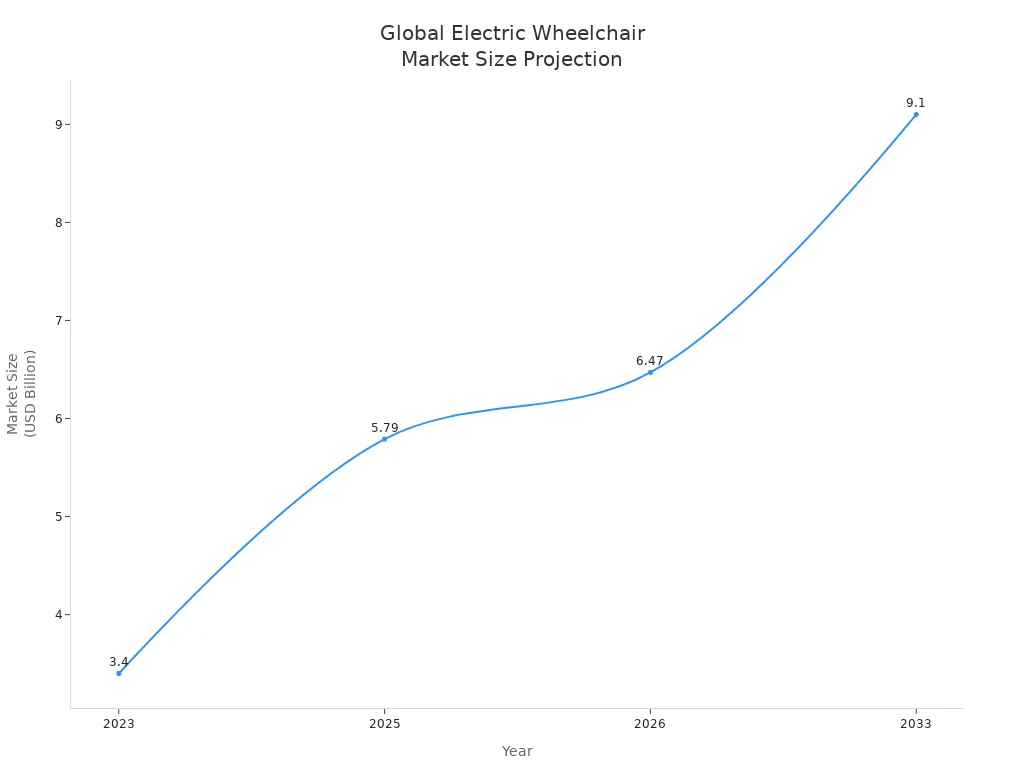
You see leading names like Daihatsu Motor Co., KERDOM, ELFIGO Mobility, and ANA Holdings redefining the electric wheelchair manufacturer landscape in 2026. Their innovations fuel rapid market growth, as shown below.
Year | CAGR (%) | |
|---|---|---|
2023 | 3.4 | N/A |
2025 | 5.79 | N/A |
2026 | 6.47 | 11.7 |
2033 | 9.1 | 10.3 |
Electric wheelchair manufacturers are rapidly innovating, leading to a projected market growth to $6.47 billion by 2026.
Top brands like Permobil and Invacare focus on quality and user-centered designs, ensuring reliable mobility solutions.
Emerging manufacturers prioritize lightweight designs and affordability, making electric wheelchairs more accessible to diverse users.
You see a dynamic landscape in 2026, where several electric wheelchair manufacturer brands dominate the global market. These companies set industry standards for quality, innovation, and international reach. You can recognize the following as the most influential:
Permobil, based in Sweden, leads with advanced power wheelchairs. You notice their focus on clinical-grade mobility solutions and user-centered design.
Invacare Corporation, headquartered in the United States, stands out for its durable electric wheelchairs. You benefit from their broad distribution network, which ensures product availability in many regions.
INTCO Medical, a major Chinese electric wheelchair manufacturer, excels in customizable solutions. You find their products meet strict international safety and quality standards.
You observe that these market leaders maintain their positions by investing in research and development. They also leverage global supply chains and adapt quickly to regulatory changes. Their strategies help them secure significant market share and influence purchasing decisions worldwide.
Tip: When you evaluate electric wheelchair manufacturers, consider their certifications and history of innovation. This approach helps you select reliable partners or products for your needs.
You witness rapid growth among emerging electric wheelchair manufacturers in 2026. The market expands at an annual rate exceeding 15%. This surge results from technological advancements and rising demand for mobility aids across diverse populations.
You see new entrants focusing on lightweight designs and enhanced battery life. These features attract users who value portability and extended range. Many emerging brands also prioritize affordability and customization, making electric wheelchairs more accessible to a broader audience.
You notice that these manufacturers often collaborate with technology firms and healthcare providers. Such partnerships accelerate product development and improve user experience. As a result, you benefit from a wider selection of innovative mobility solutions.
You see rapid progress in electric wheelchair technology in 2026. Manufacturers now offer features that improve both convenience and safety.
You can control your wheelchair with a smartphone, thanks to IoT integration.
Navigation systems use obstacle detection to help you avoid hazards.
Battery technology has improved, so you travel longer distances without frequent charging.
These advancements mean you experience greater independence. Enhanced battery life and higher energy density batteries allow you to use your wheelchair for extended periods. Smart features, such as remote-control applications, make navigation easier and more enjoyable.
You notice that electric wheelchair manufacturers have shifted their business models to focus on customization. You can select tailored seating arrangements and control systems that fit your needs. Lightweight materials are now common, which increases your comfort and makes daily use easier.
Manufacturers also form strategic partnerships with technology providers. These collaborations drive innovation and expand product offerings. You benefit from partnerships with healthcare organizations and distribution networks, which improve customer service and make it easier to access the latest mobility solutions.
You observe significant expansion in regions like Europe, the Middle East, Africa, and Asia-Pacific. In Western Europe, strict regulations encourage the use of recyclable materials and energy-efficient designs. The Gulf Cooperation Council countries invest in rehabilitative care, increasing demand for premium mobility devices. In Africa, manufacturers focus on durable solutions for challenging environments.
You see growth in Asia, especially in Singapore and the United Arab Emirates, where accessibility infrastructure supports market development. As the population ages and chronic illnesses rise, you find more options available in these expanding markets.
You notice that the competitive landscape in 2026 looks very different from previous years. Manufacturers now compete by introducing smart technology, such as adjustable seating and remote control features. You see a strong focus on user-friendly designs and innovative features. Companies race to integrate smart technologies and improve battery life. You also observe that manufacturers must balance price and quality to stay ahead. The market rewards those who adapt quickly to changing consumer needs and regulatory standards.
Manufacturers experiment with smart technology and advanced controls.
User-friendly designs and innovation drive competition.
Price competition remains intense, but quality cannot be sacrificed.
Lightweight and portable models attract more users.
You find that the high cost of electric wheelchairs continues to challenge accessibility, especially in low- and middle-income countries. Many users prioritize affordability, sometimes at the expense of advanced features. Insurance coverage remains limited, making it harder for some to access the best options. However, you benefit from manufacturers focusing on lightweight designs and enhanced portability. These improvements make daily use easier and expand your choices.
Note: Manufacturers are listening to user feedback and introducing advanced controls like joystick steering and voice activation to improve your experience.
You see that your preferences shape the market more than ever. Innovation plays a vital role in your purchase decisions, with 45% of consumers valuing advanced technology. Nearly 30% of buyers care as much about aesthetics as performance. You want options for customization, such as adjustable seating and control interfaces. The table below highlights the features you value most:
Feature/Attribute | Description |
|---|---|
Portability | Lightweight designs that make transport and independence easier. |
Battery Technology | Advanced batteries for longer life and efficiency. |
Comfort | Ergonomic seating and vibration damping for a smoother ride. |
Advanced Safety Features | Enhanced safety mechanisms for user protection. |
When you select a wheelchair in 2026, you must evaluate several important factors.
Comfort matters most. You should look for ergonomically designed seats and adjustable backrests.
Weight capacity is critical. Always check that the chair supports your needs.
Battery life impacts your independence. Choose models with robust batteries and quick-charging features.
Safety features, such as automatic brakes and anti-tip mechanisms, protect you during daily use.
Customer service and manufacturer reliability ensure you receive support when needed.
Portability and lightweight designs make transportation easier, especially if you travel often.
Tip: Customizable options can enhance usability and help you find the best fit for your lifestyle.
You see major changes in how healthcare providers deliver mobility solutions. The table below outlines key advancements and their impact:
Key Advancements | Impact on Mobility Solutions |
|---|---|
Average range now exceeds 30 miles per charge | |
Lightweight designs | Users experience greater comfort and independence |
Smart technology integration | App controls and voice commands simplify operation |
However, you also face new challenges:
Challenge | Description |
|---|---|
High Cost | Advanced features increase prices for some patients |
Maintenance and Repair | Specialized skills are needed for complex technology |
Battery Life and Range | Some users still worry about range limitations |
Safety Concerns | Automated navigation requires careful oversight |
You find attractive opportunities in technology integration and customer service improvements. Reports highlight strong project economics, including capital investment requirements and expected ROI. You can use these insights to guide your investment decisions and set up manufacturing operations.
At the same time, you must consider risks. Economic volatility and regulatory changes can affect market growth. Intense competition and high prices may deter buyers. Maintenance and durability issues can impact user satisfaction. You need to monitor these factors to protect your investment.
You face high barriers to entry, including significant capital requirements and strict regulatory standards. Established competitors dominate the market, making it difficult for new entrants to gain traction. Disruptive technologies, such as smart controls and advanced batteries, reshape market dynamics and require ongoing innovation.
Global supply chain dependencies for components like semiconductors and motors can cause production delays. Maintaining a skilled technician network for repairs and calibrations remains an ongoing challenge.
You see market leaders driving change with smart features and global strategies. You notice the rise of AI, IoT, and autonomous navigation in new models.
Sensor-based navigation and voice control gain popularity.
Smartphone connectivity and predictive maintenance enhance user experience.
Industry experts predict rapid growth as regulations adapt and smart urban mobility expands.
Focus on your mobility needs, weight capacity, battery life, safety features, and customization options to find the best fit for your lifestyle.
You benefit from obstacle detection, smartphone control, voice activation, and extended battery ranges, enhancing safety, convenience, and independence.
Prices vary from $150 to $1,000 depending on features and materials. Manufacturers are working to improve affordability through lightweight designs and innovative financing options.