Views: 2 Author: Site Editor Publish Time: 2026-09-24 Origin: Site
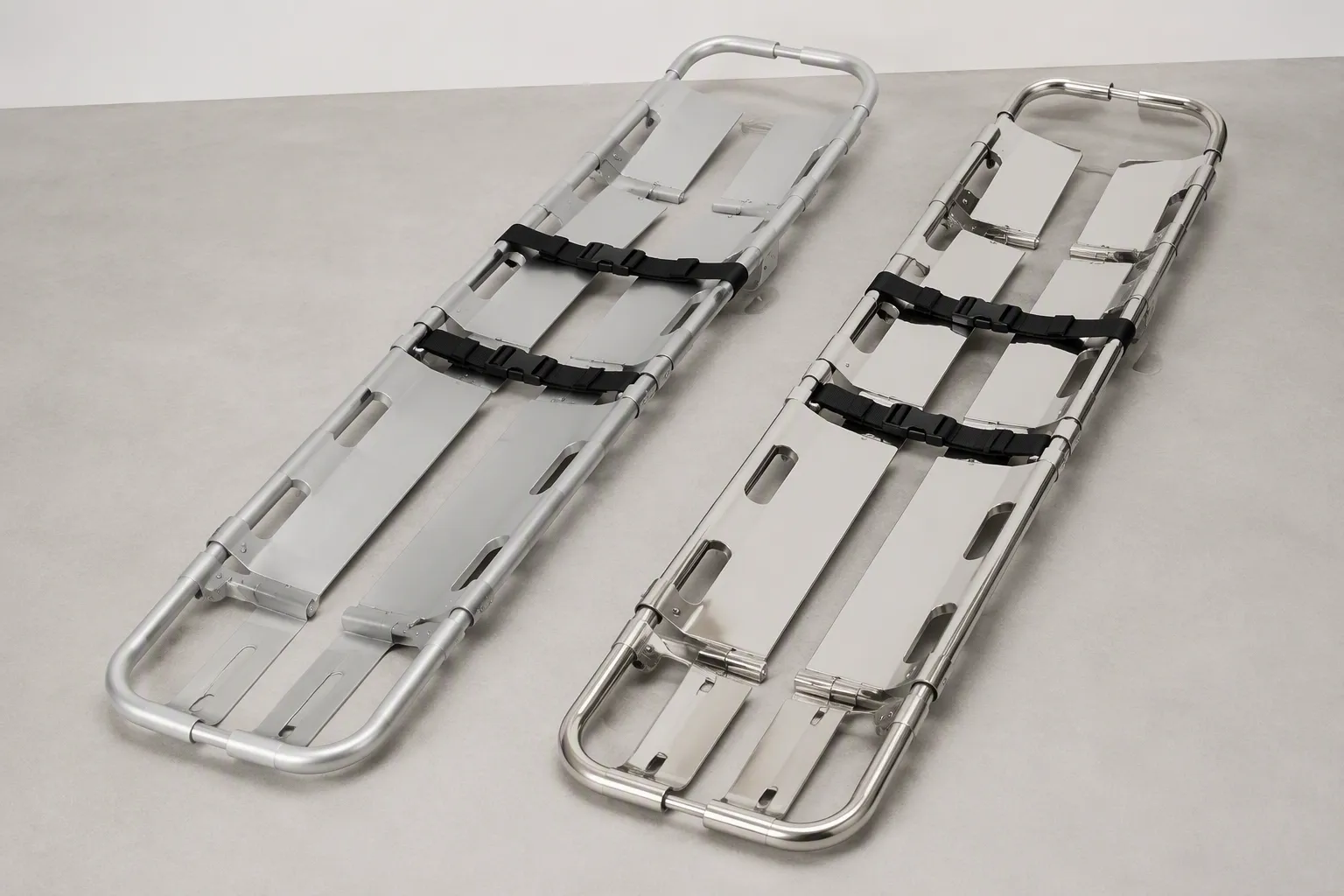
Selecting a scoop stretcher material comes down to three priorities: weight, durability, and budget. A PE scoop stretcher Aluminum Alloy Scoop Stretcher Stainless Steel Scoop Stretcher comparison helps buyers match each option to specific rescue scenarios. PE suits lightweight, low-cost, imaging-compatible transfers. Aluminum alloy balances portability with strength for emergency medical services. Stainless steel delivers maximum durability and load capacity.
PE scoop stretchers are light and cheap. They allow X-ray scans without moving the patient.
Aluminum alloy stretchers balance strength and weight. They clean easily for daily ambulance use.
Stainless steel stretchers hold the most weight. They last long for hospitals and tough field work.
The table below summarizes the core differences among the three scoop stretcher materials. Buyers can scan these specifications to identify the best fit for their operational needs.
Feature | PE (Polyethylene) | Aluminum Alloy | Stainless Steel |
|---|---|---|---|
Weight | Lightest | Lightweight | Heaviest |
Durability | Moderate | High | Maximum |
Load Capacity | Standard | High | Very High |
Cost | Lowest | Moderate | Highest |
Imaging Compatibility | Excellent (X-ray/CT) | Limited | Poor |
Corrosion Resistance | Excellent | Good (coated) | Excellent |
Maintenance | Easy wipe-down | Easy sanitization | Moderate (weight handling) |
Best Use Case | Disaster relief, basic transfers | EMS fleets, sports venues | Hospitals, military, rugged fields |
PE scoop stretchers win on weight and cost. They also provide full radiolucency for X-ray and CT scans. Aluminum alloy models deliver a strong strength-to-weight ratio. Their anti-corrosion coatings simplify cleaning between calls. Stainless steel stretchers handle the heaviest patients and the toughest environments. They resist impact and chemical damage over many years of service.
Each material serves a distinct purpose. The next section examines these differences in detail.
Each material brings distinct advantages to the rescue field. A thorough PE scoop stretcher Aluminum Alloy Scoop Stretcher Stainless Steel Scoop Stretcher breakdown helps buyers understand where each option excels. The following analysis examines construction, performance, and ideal applications for all three types.
Polyethylene scoop stretchers use a high-molecular polymer construction. This material gives the stretcher its defining characteristics: low weight, chemical inertness, and full radiolucency. Rescue teams often select PE models for disaster relief operations and fire department deployments.
The polymer frame resists water, chemicals, and extreme temperatures. These properties make PE stretchers reliable in wet environments, wilderness areas, and mountain rescues. The material does not corrode like metal. It also maintains structural integrity in both freezing cold and high heat.
Imaging compatibility stands as a major advantage for PE models. The polymer construction allows full X-ray and CT scan transparency. Medical staff can scan patients without transferring them off the stretcher. This feature reduces movement and protects patients with suspected spinal injuries.
The ergonomic design includes a specialized recessed head section. This feature maintains cervical and spinal alignment during transport. Impact resilience keeps the stretcher functional after drops or rough handling. PE scoop stretchers serve basic transfers, mass casualty events, and budget-conscious operations well.
Aluminum alloy scoop stretchers offer a strong strength-to-weight ratio. Extruded aluminum profiles keep the unit portable for paramedics. At the same time, the metal construction handles heavy patients and demanding field conditions. EMS fleets and sports venues frequently choose this material.
The surface treatment sets aluminum alloy apart for hygiene purposes. Manufacturers apply anodizing or powder coating to the metal. This treatment improves corrosion resistance and simplifies cleaning. Treated metals resist contamination and make routine disinfection straightforward.
Material | Surface Treatment | Benefit for Cleaning & Infection Control |
|---|---|---|
Aluminum Alloy | Anodizing or powder coating | Improves corrosion resistance and cleaning; treated metals resist contamination and make routine disinfection simple |
Cleaning protocols for aluminum alloy scoop stretchers follow a clear process:
Use hospital-grade disinfectant wipes or sprays on the aluminum alloy scoop stretcher.
Always follow the manufacturer's cleaning instructions to maintain hygiene and prevent cross-contamination.
Rescue teams should use manufacturer-approved disinfectants. This practice avoids degrading the protective coating. Vinyl covers and polymer frames tolerate many hospital-grade disinfectants. Repeated exposure shortens service life over time. Teams can rotate mattress inserts and use disposable covers to reduce wear. Establishing contact time and PPE requirements ensures both efficacy and safety for cleaning staff.
Easy-to-clean surfaces for infection control
Adjustable telescopic length adds versatility to aluminum alloy models. Multi-position length extension accommodates patients of varying heights. A safety restraint system with high-tensile quick-lock nylon belts secures the patient's torso and limbs. These features make aluminum alloy scoop stretchers a practical choice for daily EMS operations.
Stainless steel scoop stretchers prioritize maximum durability and load capacity. The metal construction handles the heaviest patients without flexing or bending. Hospitals, military units, and rugged field operations rely on this material for the toughest conditions.
Corrosion resistance remains excellent for stainless steel. The material withstands chemical exposure, impact, and years of heavy use. These stretchers hold up in demanding environments where other materials might fail. Military medics and industrial rescue teams often prefer stainless steel for this reason.
The trade-off comes in weight. Stainless steel stretchers weigh more than PE or aluminum alloy options. This weight can affect portability during extended carries. However, the added mass translates to superior stability and load-bearing capability. Teams with vehicle support and fixed facilities find this trade-off acceptable.
Maintenance requires moderate effort. The weight makes handling during cleaning more physically demanding. Staff should follow proper lifting techniques when sanitizing and storing these units. Stainless steel scoop stretchers deliver long-term value for high-volume trauma centers and permanent installations.
Evaluating a PE scoop stretcher Aluminum Alloy Scoop Stretcher Stainless Steel Scoop Stretcher requires attention to six factors that affect rescue outcomes and operational costs.
PE stretchers weigh the least. Teams performing long carries over rough terrain benefit from this lightweight design. Aluminum alloy models offer a strong strength-to-weight ratio that supports daily EMS work without excessive fatigue. Stainless steel stretchers weigh significantly more. Their added mass provides stability for vehicle-based transport but hinders portability on foot.
Stainless steel stretchers excel in durability and load-bearing capability. These units handle the heaviest patients without flexing or bending. Aluminum alloy offers high durability with moderate weight. PE models provide adequate strength for standard rescue scenarios but do not match metal counterparts in extreme conditions.
Cost analysis for the PE scoop stretcher Aluminum Alloy Scoop Stretcher Stainless Steel Scoop Stretcher trio reveals clear budget tiers. PE stretchers cost the least and suit organizations with tight budgets. Aluminum alloy falls in a mid-range price point that fits most EMS fleets. Stainless steel commands the highest price but delivers long service life in high-volume trauma centers.
All three materials include safety restraint systems and padded surfaces. PE models feature a recessed head section that maintains spinal alignment during transport. Aluminum alloy stretchers offer adjustable length to accommodate patients of different heights. Proper immobilization across all types reduces the risk of secondary injury.
Aluminum alloy surfaces with anodized coatings resist corrosion and clean easily. PE polymer construction allows simple wipe-down cleaning after each use. Stainless steel requires moderate effort due to its heavier frame weight. Regular disinfection following manufacturer guidelines maintains infection control across all options.
PE stretchers provide full radiolucency for X-ray and CT scans. This feature eliminates the need to transfer patients before imaging. Aluminum alloy offers limited compatibility for certain scanning types. Stainless steel blocks imaging rays entirely, requiring patient removal for any diagnostic scan.
The right choice depends on where and how a team uses the stretcher. A PE scoop stretcher Aluminum Alloy Scoop Stretcher Stainless Steel Scoop Stretcher comparison points to three clear matches.
Primary Use Case | Recommended Material | Why It Fits |
|---|---|---|
Disaster relief, mass casualty events, imaging-friendly transfers | PE (Polyethylene) | Lightest option, lowest cost, full X-ray and CT transparency |
Daily EMS operations, ambulance fleets, sports venues | Aluminum Alloy | Strong strength-to-weight ratio, easy sanitization, adjustable length |
Hospitals, military units, rugged field operations | Stainless Steel | Maximum load capacity, superior durability, long service life |
PE models serve budget-conscious organizations. These stretchers shine in wet environments and wilderness rescues. Their polymer frame resists corrosion and maintains spinal alignment through a recessed head section.
Aluminum alloy stretchers fit teams that need a balance. Paramedics carry these units with less fatigue. Anti-corrosion coatings simplify disinfection between calls. Adjustable telescopic length accommodates patients of varying heights.
Stainless steel stretchers handle the heaviest patients without flexing. Military medics and trauma centers value this stability. The added weight demands vehicle support, yet the durability justifies the investment.
Buyers should test handling, folding mechanisms, and patient comfort before committing to bulk orders. Direct manufacturers offer samples and pricing to confirm the final choice fits operational and budget constraints.
A PE scoop stretcher Aluminum Alloy Scoop Stretcher Stainless Steel Scoop Stretcher comparison points buyers toward three clear paths. PE models save money and weight for basic transfers, disaster relief, and imaging-friendly rescues. Aluminum alloy units give EMS teams strong value through moderate weight, high strength, and easy cleaning. Stainless steel stretchers deliver unmatched durability and load capacity for hospitals, military units, and rugged field operations. Teams should test handling, folding mechanisms, and patient comfort before placing bulk orders. Direct manufacturers provide samples and pricing so the final choice fits operational and budget constraints.
PE polyethylene scoop stretchers provide full radiolucency. Patients stay on the stretcher during imaging. Aluminum alloy offers limited compatibility. Stainless steel blocks imaging rays completely.
Stainless steel handles the heaviest patients without flexing. Aluminum alloy supports high loads with moderate weight. PE models manage standard rescue scenarios effectively.
Aluminum alloy scoop stretchers deliver the best balance. Paramedics carry them with less fatigue. Anti-corrosion coatings simplify disinfection between calls. Adjustable length fits patients of varying heights.
Avoid Selecting Incorrect Aluminum Casting Methods Ever Again